
Call Us: +86-15165964868Email: dzguanhua@dzguanhua.com

Stenter Machine

What is Stenter Machine


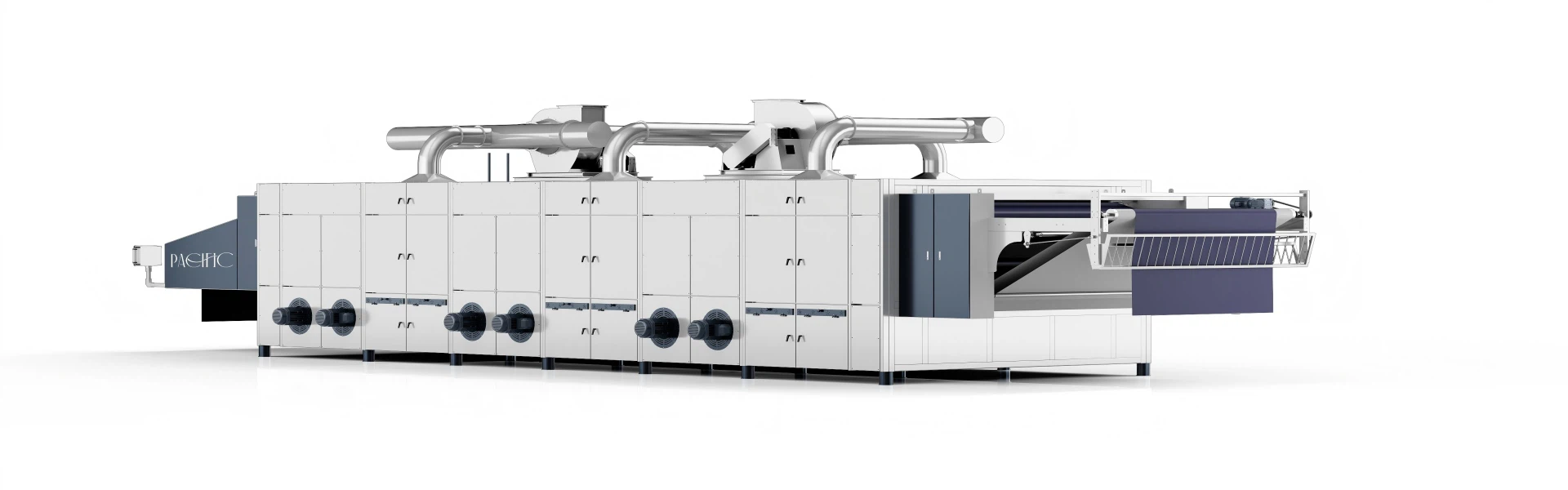
A stenter (sometimes called a tenter) is a machine used in textile finishing. It serves multiple purposes, including heat setting, drying, and applying various chemical treatments. This may be achieved through the use of certain attachments such as padding or coating.fabric's edges while it is fed from rollers, allowing it to advance gradually while maintaining its dimensions. Eventually, the stretched sheet is pulled off at a specific speed by a second set of rollers. At the delivery end, the edges are released by the stenter pins or clamps that were holding it.


Advantages of Stenter Machine


Temperature Control: A stenter machine must have precise temperature control to prevent damage to the fabric. The heating elements must be calibrated to maintain a constant temperature in the chamber, and sensors are used to monitor the temperature across the fabric surface.


Tension Control: Tension is a critical variable in the stenter machine to achieve consistent results. The fabric must be held under tension throughout the process to avoid distortion or shrinkage. The machine must have an accurate tension control mechanism to set and maintain consistent tension during processing.


Uniform Airflow: The stenter machine uses hot air to dry and fix the fabric in place. The hot air must be evenly distributed across the fabric surface to avoid any inconsistencies or defects. The airflow system must be designed to ensure uniform distribution of hot air throughout the chamber.


Multiple Treatments: The stenter machine can be used to perform various treatments on different fabrics. For example, heat setting, drying, and finishing. The machine must be designed with multiple treatments in mind, and it must be easy to change between processes quickly.


Safety Features: A stenter machine operates at high temperatures, making safety a top priority. The machine must have robust safety features to ensure the safety of both the operator and the fabric. Safety guards, interlocks, and emergency stop switches are essential to prevent accidents.

 
Why Choose US
 
01/

Our Factory
Workshop dimension: More than 10000m².
Totally produced machine quantity:More than 2000sets
Exporting countries:More than 40 countries
Market share:80% in home market

02/

Our Product
Stenter machine, Balloon padder machine, Five ( seven)pass relax dryer, Tubular compactor, Tubular calander, Tubular heat setting machine, Rope open slitting machine, Open width compactor , Air turning And so on.

03/

Production Equipment
Machining facilities: CNC laser cutting machine,bending machine shearing machine,CNC lathe machines and so on.

04/

Production Market
Market share:80% in home market
Machine export to more than 40 countries .


Types of Stenter Machine

Hot Air Stenter

This is the most commonly used stenter machine in the textile industry. It uses hot air to dry the fabric and maintain the correct temperature by using burners and heat exchangers.


Pin and Clip Stenter

This machine uses pins and clips to stretch the fabric. The pins and clips rotate the fabric, preventing any creases or unevenness in the fabric.


Loop Steamer Stenter

This machine is used for wet processing of yarn, fabrics, and garments. It uses steam to heat the fabric, and then it passes through rolls to dry the fabric.

Horizontal Chain Stenter

This machine uses a horizontal chain to pull the fabric through the oven. The chain holds the fabric in place, and evenly spreads the tension, which results in a more uniform fabric.

Vertical Chain Stenter

Similar to horizontal chain stenter this machine uses a vertical chain to pull the fabric through the oven. It is preferred for longer fabrics as it reduces the risk of fabric wrinkles.

Cylinder Stenter

This machine uses a large cylindrical drum to stretch the fabric. The drum rotates, holding and stretching the fabric, maintaining tension, and drying it.


Applications of Stenter Machine

Stenter machines are extensively utilized in the textile industry. They are responsible for imparting high-quality finishing to fabrics. From dyeing to printing, the stenter machine plays a crucial role in enhancing the aesthetics and properties of fabrics.

1

Drying

Drying is the foremost application of stenter machines. After the dyeing process, the fabric needs to be dried. The stenter machine is used for drying the fabric to remove excess moisture from it. The heat and pressure applied during the process help in the proper drying of the fabric.

2

Setting

The stenter machine is also used for setting the fabric. It is a process of stabilizing the fabric by applying heat and tension. The process ensures that the fabric maintains its dimensions, shape, and stability. This avoids the fabric from shrinking, which can cause distortion and misshapenness.

3

Heat Setting

Heat setting is another application of the stenter machine. It is a process of heat treatment that improves the thermal properties of the fabric. The process involves exposing the fabric to high temperatures for a specific amount of time. It enhances the dimensional stability of the fabric, and the fabric becomes more resistant to wrinkles.

4

Coating and Lamination

The stenter machine is also used for coating and lamination of fabrics. Coating is the process of applying a thin layer of material on the fabric for improved properties, such as water resistance, UV protection, stiffness, and durability. Lamination is the process of bonding two or more layers of fabrics together. Both these processes are necessary to add value to the fabric.


The Process of Stenter Machine
Textile Continuous Dryer
Double Tubular Compactor Machine
Tensionless Slitter and Rope Opener Machine
Rope Opener and Balloon Padder

The Stenter Machine is a device used in the textile industry for drying, stretching and fixing fabrics. The process of stenter machine involves the fabric being drawn over a series of pins and then subjected to heat and air pressure to achieve the desired effect.


The machine consists of a conveyor belt that moves the fabric through a chamber where it is subjected to heat and the necessary tension for stretching. The stretching process helps to eliminate any wrinkles from the fabric and ensure that it retains its shape after drying.


Once the fabric has been stretched, it is treated with a special finishing agent, which is sprayed onto the fabric. This agent helps to improve the durability of the fabric, enhance its appearance, and add any other desired qualities such as flame resistance or water repellency.


The fabric is then passed through a series of heating chambers where it is dried and cured. The temperature in these chambers is carefully monitored to ensure that the fabric does not become overheated or damaged.


Finally, the fabric is cooled down and passed through a series of rollers that smooth out any wrinkles that may have formed during the drying process. The finished fabric is then rolled up on a large spool and can be used for a variety of applications.


The process of stenter machine plays a significant role in the textile industry. It helps to create high-quality fabrics that are durable, attractive and long-lasting. With the use of modern technology and innovative techniques, the process of stenter machine is continually evolving to keep pace with the demands of the industry.


Things to Consider When Purchasing Stenter Machine


When purchasing a stenter machine, there are several things that need to be considered to ensure that the machine will meet your business requirements and provide high-quality output. Below are a few key factors to consider.


Machine Size: Stenter machines come in different sizes, ranging from small ones to large ones. Depending on your production requirements, you may need a larger machine or a smaller one. It’s essential to consider the size of the raw materials that you use and the width of the finished products to select the right machine.


Machine Capacity: Machine capacity is related to production volume. If the volume is higher, you’ll need a machine that can process more fabric in a shorter period of time. Hence, choosing a machine with high capacity is crucial.


Heating System: Stenter machines use different methods of heating, such as direct gas, thermal oil or electricity. It’s important to consider the cost of fuel, energy efficiency, and environmental impact while choosing a heating system.


Machine Configuration: The stentering process involves several steps such as stretching, heat setting, and cooling. Depending on your product requirements, you need to select the appropriate machine configuration that matches your production process.


Automation: Automated stentering machines can deliver high-quality output consistently and reduce the need for manual intervention. If you’re looking to streamline your production process and reduce labor costs, consider purchasing a machine with automation features.


Maintenance: Proper maintenance is essential for the longevity of the stenter machine, and it’s critical to consider the cost of maintenance and availability of spare parts. Choosing a reputable supplier who offers excellent after-sales support is essential.


Component of a Stenter Setting Machine


Stenter system: This is the core part of the stenter setting machine, which is used to stretch textiles. It usually includes one or more rollers, and the stretching effect is achieved by adjusting the speed difference of the rollers. The design of the stenter system can be adjusted to different textile types and requirements.


Heating system: The stenter setting machine is usually equipped with a heating system to heat the textile to achieve the setting effect. The heating system can be used in different ways, such as hot air, hot rollers or hot plates, etc.


Control system: The control system is used to monitor and control the operation of the stenter setting machine. It can detect parameters such as tension, temperature and speed of textiles through sensors, and adjust according to the set parameters. The control system can also be used for functions such as recording production data and fault diagnosis.


Conveying system: The conveying system is used to convey the textile from one end to the other for stretching and setting. It usually includes conveyor belts, rollers and tension control devices, etc.


Preparations of the Stenter Setting Machine
 

We need to clean the surface of the stenter setting machine equipment, the work surface, etc., especially the drop frame and the second half of the machine. After that, you need to clean up the work site to avoid cleaning around the equipment.


In the second step, we need to pay attention to check whether the rear part of the equipment is normal, and check whether the auxiliary facilities such as the cloth stacking vehicle are complete and intact, whether the setting of the cloth guide and threading route is reasonable, and whether it can meet the work requirements, etc.


After checking and confirming that there are no abnormal problems, the third step is to understand the relevant information and requirements in advance, so as to master the process and quality requirements of the cloth to be processed, which also provides convenience for the later operation of the stenter setting machine.


The fourth step is to put the fabric guide trolley in a suitable position, usually under the cloth drop frame, and prepare an empty trolley to receive and release the processed fabric produced.


In the fifth step, we should choose a suitable empty roll rack according to the specific properties of the fabric to be processed and the production requirements. After that, the position layout should be adjusted appropriately so that the winding roller and the cloth winding roller are parallel. After that, the staff can open the stenter setting machine at the same time to start the setting operation.


Precautions for Fabric Tenter Machine

If abnormal problems are found during the inspection, they must be dealt with in time, and they can be used only after the problems are solved. It is strictly forbidden for the fabric machinery to work with problems. Then according to the specific work requirements, set the appropriate temperature and turn on the equipment in turn. Moreover, when the stenter machine is in the running state, as a staff member, it is also necessary to pay more attention, not only to observe the working status of the tenter machine for Woven Fabric and setting machine equipment in time, but also to make appropriate adjustments according to the actual situation to meet the actual production situation, so that The device is always in a stable state. At the same time, make sure that the safety shield is intact to avoid accidents. We need to be prepared for downtime when work is nearly done. Please remember that we need to send the cooling notice to the oil furnace room before shutting down the stenter. Then turn off the fans and turn them on for cooling. At this time, when the temperature drops to 80 degrees Celsius, the equipment can be turned off to avoid the problem of uneven heating, so as not to affect the processing effect.

Tubular Fabric Relax Dryers


How to Save Energy of Stenter Machine


Know the maintenance plan of your system.Only a system which is maintained regularly can provide full output with most economic input of energy.


The lint filters of your system should be inspected at least once every shift to ensure that they are clean and they should be cleaned with a brush or vacuumed if necessary.The heat recovery modules also require cleaning at the prescribed intervals. Soiled screens and heat exchangers reduce the output of the system substantially and increase its energy consumption.


The padder: The setting of the contact pressure should be within the working area of the diagram at the operator console (hatched area) to ensure that the squeeze effect is uniform over the full width.The more moisture is removed and the better it is removed, the less energy is needed for drying.


The drying temperature ranges from 105° to 150°C (depending on the fabric). Material, finishing agents and methods determine the drying temperature. The recommendations of the dyestuff and/or chemicals producers should be observed. High drying temperatures not only consume too much energy, they often also damage the fabrics to be finished.


An important aspect for good drying is to measure and control the exhaust moisture.Depending on the fabric and the initial moisture, the optimum


values are at 10-20% by vol. If the exhaust contains less moisture, too much fresh air is heated and energy wasted.If the exhaust contains too much moisture, drying is poor;it takes more time and energy is wasted. Exhaust moisture: This is the moisture contained in the exhaust air of the drier.


When drying is the only purpose, monitoring the residual moisture is important. The optimum residual moisture is measured with a humidity


Meter at the outlet of the drier then controlled as needed. Some examples of optimum residual moisture: Co 6-8% CV 8-10% Wo 10-12% PES 1-2 % PES/Co 2-4 % If the fabric is very dry, too much energy is wasted and drying is too expensive. At the same time, production is slowed down unnecessarily.


Too little residual moisture also causes loss of quality. Residual moisture: This is the moisture contained in the fabric, when it leaves the system.


Do not heat the system longer than needed.Do not hold the system at temperature without fabric longer than necessary. Both waste energy and contaminate the environment.


Optimizing the dwell time. Depending on the fiber, the heat setting of textiles requires a certain dwell time. The dwell time must be observed to obtain the required fabric characteristics.


Setting the air circulation fans (with stenters): The ALIDO stenter is equipped with the TwinAir system. The flow rate for bottom and top air can be set separately. Set the air circulation fans to ensure that the fabric floats in the drier without contacting it.


FAQ
 

Q: What is a stenter machine?

A: A stenter is a machine for drying cloth, in which sheets for drying are held by the edges. The stenter uses hot air to dry the textiles. The fabric is dried on a stenter. A stenter is a machine for drying cloth, in which sheets for drying are held by the edges.

Q: What is the difference between stenter and compactor?

A: Both of them have a different usage in the process of finishing the fabrics. Stenter is useful for drying, preheat setting and for applying different chemical finishes. The compactor is entirely different from Stenter which is useful to final finish like to control residual shrinkage and to remove the creases.

Q: What is the benefit of stenter machine?

A: The purpose of the stenter machine is to bringing the length and width to pre determine dimensions and also for heat setting and it is used for applying finishing chemicals and also shade variation is adjusted. The main function of the stenter is to stretch the fabric widthwise and to recover the uniform width.

Q: What is the objective of stenter?

A: The primary purpose of this machine is to stretch and dry fabric. In the past, frames used for this purpose were called "tenter", and the metal hooks employed to hold the fabric to the frame were known as "tentering hooks".

Q: How long is a stenter machine?

A: Stenter machine consists of two endless auto-lubricated driven chains, typically 40 to 60 m in length carrying pins or clips to hold the fabric edges while passing through a number of hot-air chambers (3–5, each of about 3 m).

Q: What is heat setting in stenter machine?

A: Knitting, dyeing and finishing are the main steps in knit fabric processing. In finishing, Stenter machine is. used to dry and heat-setting of fabrics. Generally one step heating process is running in most of the knit. industries where knit fabrics in wet condition pass through very hot chambers (80–200 °C) in stenter.

Q: What is the process of Stentering in textile industry?

A: Stentering is a process in the textile industry that is used to dry and stretch fabrics. It involves passing a fabric through a stenter machine, which uses heat and tension to stretch the fabric and set it to a desired width and shape.

Q: What is the objective of stenter machine?

A: The purpose of the Stenter machine is to bringing the length and width to pre determine dimensions and also for heat setting and it is used for applying finishing chemicals and also shade variation is adjusted. The main function of the Stenter is to stretch the fabric widthwise and to recover the uniform width.

Q: What is a stenter?

A: The term "Stenter" refers to a crucial machine used in the textile industry for the processing and finishing of fabrics. It plays a significant role in improving the dimensional stability and appearance of textiles.

Q: How to work a stenter machine?

A: Usually, the chemical mixing tank has a chemical solution. The solution contains water at half of tank capacity. Depending on the requirement, the fabric stays here five to seven minutes during the operation. Then the operation experts check 1 meter of fabric for further operation.

Q: What is the temperature of stenter?

A: Generally one step heating process is running in most of the knit industries where knit fabrics in wet condition pass through very hot chambers (80–200 °C) in stenter which needs to slow the machine speed to evaporate water completely and deliver low production ultimately.

Q: What is the process of Stentering?

A: Stentering is one of a series of textile finishing processes, where the selvedges of an open-width fabric are held at a predetermined width with maintaining proper tension. The attachment to the selvedges can be by pins.

Q: What are the objectives of stenter machine in textile?

A: The purpose of the Stenter machine is to bringing the length and width to pre determine dimensions and also for heat setting and it is used for applying finishing chemicals and also shade variation is adjusted. The main function of the Stenter is to stretch the fabric widthwise and to recover the uniform width.

Q: What is overfeed in a stenter machine?

A: In the process of overfeeding, fabric is fed to the stenter at a rate exceeding the speed at which it is being delivered. Heatsetting both pre-heatsetting and post-heatsetting of the fabrics. Heatsetting helps in stabilizing synthetic fabrics such as polyester, nylon, and spandex.

Q: What is the difference between a dryer and a stenter?

A: Dryer is used only to dry fabrics, whereas stenter is used for both drying and heat setting operations.

Q: What is the power consumption of stenter machine?

A: Typically one stenter consumes between 40 to 55 kWh per hour electricity and 50 to 60 kg per hour RPC.

Q: What is the working principle of stenter machine?

A: Usually, the chemical mixing tank has a chemical solution. The solution contains water at half of tank capacity. Depending on the requirement, the fabric stays here five to seven minutes during the operation. Then the operation experts check 1 meter of fabric for further operation.

Q: What is the construction of stenter machine?

A: Stenter machine consists of two endless auto-lubricated driven chains, typically 40 to 60 m in length carrying pins or clips to hold the fabric edges while passing through a number of hot-air chambers (3–5, each of about 3 m). Hot air is directed onto the fabric equally from above and below.

Q: What is the function of the stenter machine parts?

A: The purpose of the Stenter machine is to bringing the length and width to pre determine dimensions and also for heat setting and it is used for applying finishing chemicals and also shade variation is adjusted. The main function of the Stenter is to stretch the fabric widthwise and to recover the uniform width.

Q: What is stentering?

A: Stentering is a mechanical finishing method used on textiles. It is carried out in order for the stenter machine to stretch the fabric.

We're well-known as one of the leading stenter machine manufacturers and suppliers in China. Please feel free to buy high-grade stenter machine for sale here from our factory. All our products are with high quality and competitive price.

(0/10)

clearall