
Call Us: +86-15165964868Email: dzguanhua@dzguanhua.com

Heat Setting Machine

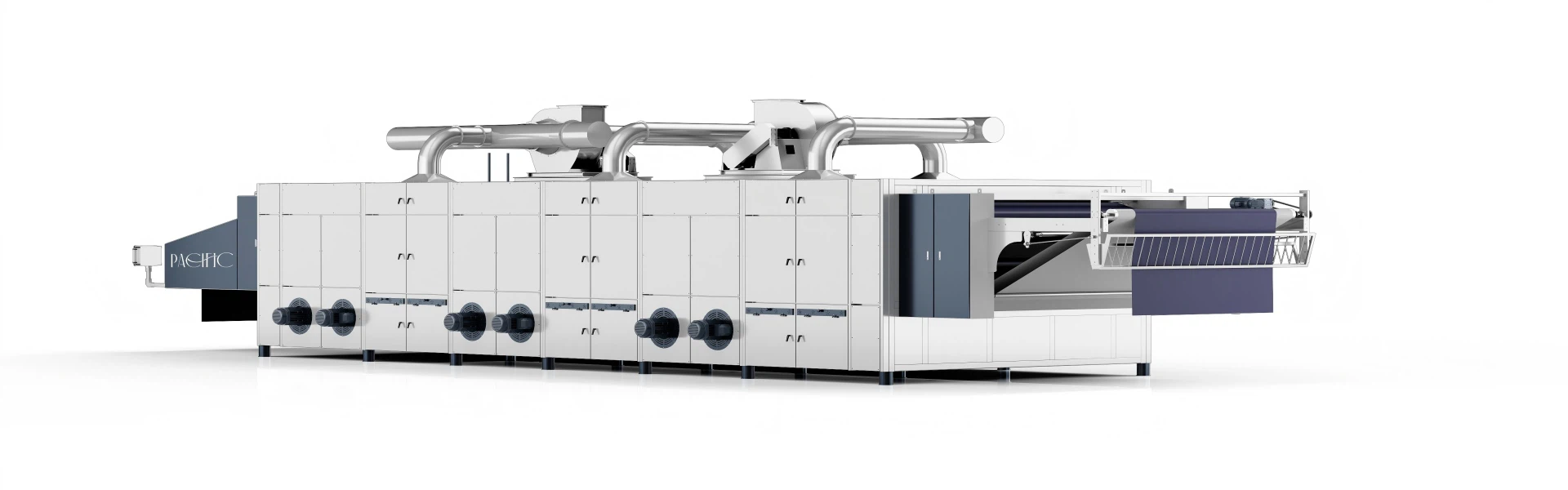
What is Heat Setting Machine


Heat setting is a term used in the textile industry to describe a thermal process usually taking place in either a steam atmosphere or a dry heat environment. The effect of the process gives fibers, yarns or fabric dimensional stability and, very often, other desirable attributes like higher volume, wrinkle resistance or temperature resistance. Very often, heat setting is also used to improve attributes for subsequent processes.


Advantages of Heat Setting Machine


Efficiency: The knitted fabric setting machine can quickly complete the setting process of the fabric, which greatly improves the production efficiency. Machines can do more work than hand shaping and do it in a short amount of time.


Accuracy: This machine can accurately shape the fabric according to the preset parameters and requirements. Whether it's shape, size or texture, the machines are able to precisely realize the designer's requirements, ensuring product consistency and quality.


Versatility: Knitted fabric setting machines usually have multiple functions, which can adapt to different types of fabrics and shaping needs. Whether it is cotton, wool, silk or synthetic fibers, the machine is able to handle them and can achieve different finishing effects such as flat, crinkled or three-dimensional effects.


Cost saving: Although the purchase cost of knitted fabric setting machines is higher, they can greatly save human resources and time costs. The automated features of the machines can reduce the need for manual operations and also reduce losses due to human error.


Repeatability: The standardization and repeatability of fabric setting can be realized by using the knitted fabric setting machine. This means that whether it is a high-volume production or a custom production, the machine is able to ensure consistent shaping of each product, providing a high-quality finished product

 
Why Choose US
 
01/

Our Factory
Workshop dimension: More than 10000m².
Totally produced machine quantity:More than 2000sets
Exporting countries:More than 40 countries
Market share:80% in home market

02/

Our Product
Stenter machine, Balloon padder machine, Five ( seven)pass relax dryer, Tubular compactor, Tubular calander, Tubular heat setting machine, Rope open slitting machine, Open width compactor , Air turning And so on.

03/

Production Equipment
Machining facilities: CNC laser cutting machine,bending machine shearing machine,CNC lathe machines and so on.

04/

Production Market
Market share:80% in home market
Machine export to more than 40 countries .


Methods of Heat Setting
Fabric Heat Setting Machine
Tubular Fabric Heat Setting Machine
Knitted Fabric Heat Setting Machine
Knitted Fabric Calender Machine

Contact method
In this method the fabric is run in contact with a heated metal surface. Some machines are composed of metal rollers having gas fired cores and are filled with a liquid known as diatherm to uniformly distribute the heat. Sometimes enclosed rollers are heated with high temperature steam.


Steam-setting method
Short staple polyester yarns including polyester/cotton blends are normally set by relaxation in saturated steam. The most effective means of stabilizing these materials are to steam at 107~ on the ring spinners tube and soft dyeing packages under minimum tension. Sewing threads receive special setting treatments, designed to confer stability whilst preserving their high tensile properties. Polyester garments, garment lengths and hosiery are also stabilized by steaming in much the same way as for yams. Nylon can be set in saturated steam at temperatures above 1OO°C in an autoclave by batchwise process.


Hydro-setting method
The hydro-setting or aqueous heat-setting of polyester is done with hot water in a high temperature liquor circulating machine at about 130°C. A typical cycle may require 30 min. Water (or steam) promote swelling of fibre and may cause some hydrolysis in the ester groups in polyester chain. Nylon fabric can be hydro-set in hot water since the swelling action assists in weakening or breaking intermolecular bonds.


Heat-setting using stenter machine
Stenter machine are widely used for stretching, drying, heat-setting and finishing of fabrics. Woven and knitted fabrics of polyester and nylon fibers and their blends are normally heat-set on pin-stenter in hot air.
An alternative to the pin stenter is the clip machine. The fabric is held into the chains either by pins mounted into a base plate or by clips in which the fabric edge is clamped between two smooth surfaces. Stenters that are used for setting only have a light pin chains whereas stenters used for both drying and setting (finishing) are provided with a heavy combined pin and clip chain.


Selective infra-red emitters method
Polyester can be heat-set by exposing the material under selected areas of magnetic spectrum of infra-red rays. The wavelength of the radiation source must be chosen with respect to the absorption band of the fiber i.e. a particular infra-red wavelength is chosen for a particular fiber. For example, in the case of polyester the selective infra-red radiation wavelength is the region of 1 to 4 g.


Knitted Fabric Compacting Machine


Process Flow of the Setting Machine

Equipment composition and process flow of the setting machine:
Flat-width cloth feeding → infrared centering → two-roller oblique rolling machine → swing-type elastic frame → (photoelectric weft straightening position reserved for users to take care of) → lower overfeed → mechanical weft straightening → thread width expansion → upper overfeed → three-finger edge stripping → infrared edge detection → upper needle plate → 8-chamber drying room → cold air cooling (two groups of 600mm) → needle removal → cloth overfeed → cold water roller (Φ570mmX1) → flat-width and package cloth dropping.

  • MH558B two-roller flat rolling mill 1 set;
  • Photoelectric weft straightening (user-provided) 1 unit;
  • Stentering machine ASMA5038-200*8 1 set;
  • 1 set of combined machine direct management parts;
  • One set of combined machine electrical control cabinet.


Application of Knitted Fabric Setting Machine

Clothing manufacturing: The knitted fabric setting machine can be used to make various knitted clothes, such as T-shirts, sweaters, knitted skirts, etc. It shapes and shapes knitted fabrics to give them the desired shape and size.


Household items: The knitted fabric setting machine can also be used to manufacture household items, such as knitted curtains, knitted carpets, knitted bedspreads, etc. Styling gives these knitted fabrics a better look and structure.


Industrial application: In some industrial fields, such as automobile manufacturing, aerospace and shipbuilding, knitted fabric setting machines are also widely used. It can be used to make seat fabrics, upholstery materials and other knitted parts that require a shape.

Knit Tubular Compactor Machine


Textile Tube Compactor


Working Principle of Knitted Fabric Setting Machine

The knitted fabric setting machine is a kind of equipment specially used for setting the knitted fabric. Its working principle mainly involves the application of heat and pressure.


First, the knitted fabric is placed on the table of the setting machine, and then it is fed into the machine by a conveyor belt or other means. Next, the machine heats up, usually using steam or hot air, to provide heat. This thermal energy is transferred to the knitted fabric, making it soft and easy to shape.


At the same time, the machine applies pressure to the fabric, usually by way of rollers or platens. This pressure helps to keep the cloth in the desired shape and size, while also helping to bring the cloth into better contact with the heat for better hold.


During the whole process, the machine will control factors such as heating temperature, pressure and processing time according to the preset parameters and requirements to ensure that the knitted fabric is properly shaped. Once set, the fabric is removed from the machine and held in the desired shape as it cools.


Effect Achieved by the Woven Fabric Setting Machine


Fabric leveling: The woven fabric setting machine can be processed by heat or steam to make the surface of the fabric level, remove wrinkles and wrinkles, and make the fabric look neater.


Embossing and texture: By applying pressure and heat on the woven fabric, the setting machine can create various texture and pattern effects, such as concave-convex feeling, floral pattern, etc., to increase the beauty and texture of the fabric.


Shrinkage and stretching: The woven fabric setting machine can realize the shrinkage or stretching effect of the fabric by controlling the temperature and stretching force. This can be used to adjust the size and shape of the fabric to make it more suitable for a particular application.


Anti-shrinkage and anti-wrinkle: The setting machine can improve the anti-shrinkage and anti-wrinkle performance of the fabric by heat treatment or adding chemical substances. This allows the fabric to retain its shape and flatness through washing and wearing.


Dyeing and printing: Woven fabric finishing machines are often used in conjunction with dyeing and printing processes to ensure color and pattern permanence. Styling machines can cure dyes or inks with heat so that they are firmly attached to the fabric to prevent fading and peeling.


Factors to Consider When Choosing a Heat Setting Machine
 

When it comes to choosing a heat setting machine, there are several factors that need to be considered. Heat setting machines play a crucial role in various industries, including textile and printing, as they help set the shape and properties of different materials. Therefore, it is essential to select the right machine that meets the specific requirements of your business.


One of the key factors to consider is the type of material you will be working with. Different heat setting machines are designed to handle specific materials, such as fabrics, yarns, or plastics. Therefore, it is important to choose a machine that is compatible with the materials you will be processing. This ensures optimal performance and prevents any damage to the materials.


Another important factor to consider is the heat setting temperature range of the machine. The temperature range should align with the requirements of the materials you work with. Some materials require low heat settings, while others may require higher temperatures for effective setting. It is crucial to choose a machine that offers a wide temperature range to accommodate different materials and processing needs.


The size and capacity of the heat setting machine also play a significant role. Depending on the volume of materials you need to process, you may require a machine with a larger capacity. Additionally, the size of the machine should be suitable for your workspace. It is important to ensure that the machine can be easily integrated into your production line without causing any disruptions.


Lastly, consider the cost and maintenance requirements of the heat setting machine. It is important to choose a machine that offers a good balance between performance and affordability. Additionally, inquire about the maintenance requirements and availability of spare parts to ensure smooth operation and minimize downtime.


Heat Setting Process and Stages


Heat setting process
The most common reason for heat setting is to achieve the dimensional stability of a yarn or fabric containing thermoplastic fibers. Heat setting is a heat treatment that gives fibers shape retention, wrinkle resistance, resilience and elasticity. It also changes strength, stretchability, softness, dyeability, and sometimes the material’s color. All these changes have a relationship with the structural and chemical modifications that occur in the fiber. Heat setting also reduces the tendency to develop creases in fabric, such as washing and hot ironing. That is a critical point for garment quality.


Heat setting is running at a high temperature, usually with hot water, steam, or dry heat. The choice of the heat setting method depends on the textile material itself and the desired setting effect, and of course very often on the equipment available, which means the relaxation of tensions within the textile material results in shrinkage.


The heat setting process is only used on synthetic fabrics such as polyester, polyamide, and other blends to make them dimensionally stable against subsequent hot operations. Other benefits of heat setting include minor fabric wrinkling, less fabric shrinkage, and reduced pilling tendency. The heat setting process involves subjecting the fabric to dry hot air or steam heating for several minutes and then cooling it down. The heat setting temperature is usually set above the glass transition temperature and below the melting temperature of the material comprising the fabric.


Polyester and polyamide fabric can be heat treated to remove the internal tensions within the fibers. These tensions are usually formed during production and further processing, such as weaving and knitting. The new relaxed state of fibers is fixed (or set) by rapid cooling after the heat treatment. Without this setting, the fabrics may shrink and wrinkle during later washing, dyeing, and drying.


Heat setting stages
Heat setting can be performed at three different stages in a processing sequence: in grey condition, after scouring and after dyeing. The stage of heat setting depends on the extent of contaminations and types of fibers or yams present in the fabric.


1, Heat setting in grey condition is useful in the warp knit industry for materials that can only carry a small amount of lubricant and for products that need to be scoured and dyed on beam machines. Other benefits of grey heat setting are: yellow color due to heat setting can be removed by bleaching, the fabric is less likely to wrinkle during further processing, etc.


2, Of course, heat setting can be performed after scouring process if you worry that the goods will shrink or for the fabric in which stretch or other properties is developed during a carefully controlled scouring process. However, this stage requires drying the fabric twice.


3, Heat setting also can be performed after dyeing. Post set fabrics show considerable resistance to stripping compared with the same dyeing on unset fabric.


Precautions for Using the Heat Setting Machine


Regular cleaning of equipment: Check the gears, chains, and belt pulleys of the transmission part for dust or socks. Check and clean them every day. Check the areas where butter is applied for lumps. Check the wear of each belt every day. Oil the rail guide, sock plate seat, and connecting iron once every shift. Change the oil of each gear reducer every six months.


Check the tension of each chain every week: The two chains connected to the moving socks should be tightened as much as possible. It is better to loosen the chains of other parts manually. (No jumping)


The filter cover and heater cover of the drying box and the cover used for the first drying fan must be cleaned once a month, and the length of cleaning time should be determined according to the different materials of the socks. When producing cotton socks, they should be checked once a week.


Try not to press the stop button during the operation of the machine to ensure the normal operating speed of the machine. If you cannot change the type of product in time, you can reduce the speed or increase the number of people to avoid stopping the machine at random.


When a fault occurs, you should understand in detail the machine's operating conditions before the breakdown to increase the speed of repair and reduce downtime, thereby ensuring the operating rate.


The operating rate of the shaping machine depends on the operator's ability to stop the machine. A large part of the machine stops because socks accidentally fall on the machine. Reducing the number of times socks fall can greatly improve the operating rate of the equipment. (This is especially important).


FAQ
 

Q: What is the purpose of heat-setting?

A: Heat-setting is a heat treatment by which shape retention, crease resistance, resilience, and elasticity are imparted to the fibers. It also brings changes in strength, stretchability, softness, dyeability, and sometimes on the color of the material.

Q: What is the heat-setting technique?

A: Heat setting is a hotness treatment by which shape maintenance, wrinkle obstruction, versatility and flexibility are bestowed to the filaments.

Q: What are the types of heat setting?

A: Contact method- In this method the fabric is run in contact with a heated metal surface.
Steam-setting method- Short staple polyester yarns including polyester/cotton blends are normally set by relaxation in saturated steam.
Hydro-setting method.

Q: What are the stages of heat setting?

A: Heat setting can be performed at three different stages in a processing sequence: in grey condition, after scouring and after dyeing. The stage of heat setting depends on the extent of contaminations and types of fibers or yams present in the fabric.

Q: What are the factors affecting heat setting?

A: The treatment time required for heat -setting also depends on several factors, including the setting temperature , fiber type and the method of heat -setting. Generally, higher temperatures require shorter treatment times to achieve the desired level of relaxation and properties.

Q: Why is heat setting used?

A: Heat setting can eliminate the tendency of undesirable torquing. At the winding, twisting, weaving, tufting and knitting processes, the increased tendency to torquing can cause difficulties in processing the yarn.

Q: What is the function of a stenter machine?

A: A stenter (sometimes called a tenter) is a machine used in textile finishing. It serves multiple purposes, including heat setting, drying, and applying various chemical treatments. This may be achieved through the use of certain attachments such as padding or coating.

Q: What are the objectives of heat setting?

A: The main objective of the heat setting process is to ensure that fabrics do not alter their dimensions during use. This process is for the stabilisation of synthetic fibres so they do not shrink when subject to heat.

Q: What temperature is low heat setting?

A: Low heat is usually around 125 degrees Fahrenheit and is designed for delicate items like knitwear or sheer fabrics, as well as workout clothes made of high-performance fabric like spandex and lycra. Low heat helps protect heat-sensitive fabrics from fraying, fading, wrinkling, stretching and warping.

Q: What is the principle of heat setting?

A: Heat setting is to use the thermoplasticity of synthetic fibers to maintain a certain size and shape of the fabric, and heat it to the required temperature, so that the movement of the fiber molecular chain is intensified, the internal stress of the fiber is reduced, the crystallinity and the crystal region .

Q: What is the heat setting for polyester?

A: Choosing the Right Temperature for Heat Pressing Polyester: Lower temperature settings are crucial for preventing damage. Ideal temperature range: 270°F to 300°F (132°C to 149°C).

Q: What is the heat setting process?

A: During heat setting process the fabrics are passed through heated chambers of stenter machine. The temperature of heated chamber varies from 140°C to 210°C with an interval of 10°C. Thus the heat setting of 8 samples are done at different temperature.

We're well-known as one of the leading heat setting machine manufacturers and suppliers in China. Please feel free to buy high-grade heat setting machine for sale here from our factory. All our products are with high quality and competitive price.

(0/10)

clearall